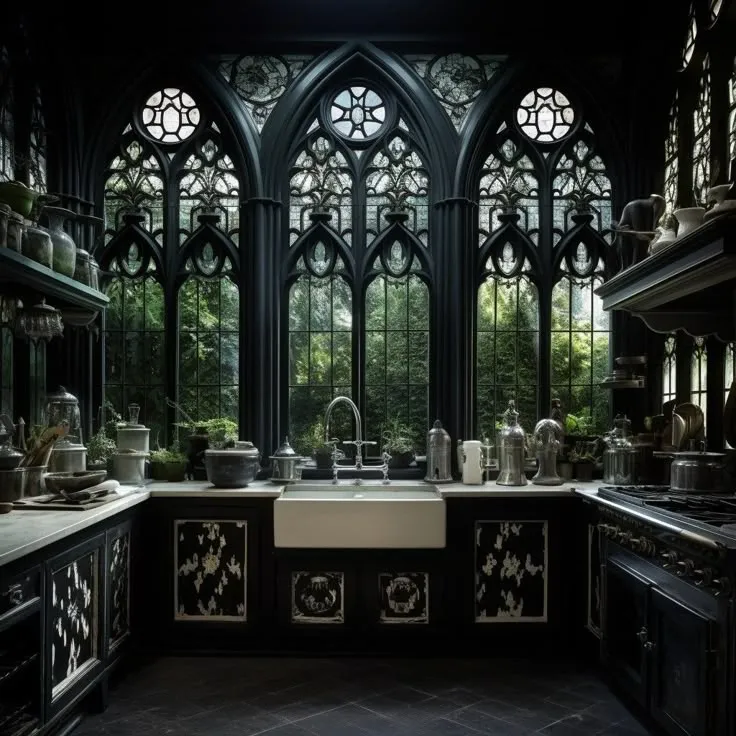
Embracing the Gothic Kitchen Aesthetic
Transforming your kitchen into a gothic haven is all about creating a space that is both dramatic and inviting. It’s about embracing the beauty of darkness, incorporating vintage elements, and layering textures to evoke a sense of mystery and elegance. The gothic aesthetic is not just a style, it’s an experience. It’s about curating a space that tells a story, a space that feels both familiar and otherworldly. It’s a celebration of the past, a nod to the romantic, and a bold statement of individuality. Consider the mood you wish to create. Are you looking for a dramatic, candlelit space or a more subtle, vintage-inspired area? Your choices in color palette, materials, and decor will all contribute to the overall ambiance. This style is about creating a sanctuary, a personal retreat from the everyday. With thoughtful planning and the right touches, you can easily weave the gothic aesthetic into your kitchen, resulting in a space that is both beautiful and uniquely you.
Dark Color Palette
The foundation of any gothic kitchen is a dark and moody color palette. This doesn’t necessarily mean you have to paint everything black, although that is certainly an option. Think deep hues that evoke a sense of mystery and depth. Colors such as charcoal gray, deep forest green, burgundy, and navy blue work exceptionally well. The goal is to create a backdrop that enhances the other elements of your design. Consider the natural light in your kitchen. If you have limited natural light, opt for lighter shades of the darker colors, or use the darker shades as accent colors. The interplay of light and shadow is crucial in a gothic kitchen, so be mindful of how the colors will interact with the existing light sources. Don’t be afraid to experiment and find the combination that best suits your space. The right color palette will set the tone for the entire design, creating a space that is both captivating and inviting. The perfect backdrop sets the scene for all the other elements.
Choosing the Right Paint Colors

Selecting the right paint colors is key to achieving the gothic kitchen aesthetic. Consider the mood you want to create. A deep charcoal gray can create a sense of sophistication, while a rich burgundy can add a touch of luxury. Forest green evokes nature and tranquility, while navy blue provides a sense of depth. When choosing your paint colors, consider the finish. Matte finishes absorb light, adding to the dramatic effect, while satin or eggshell finishes offer a subtle sheen that can reflect light and brighten the space. Always test paint samples in your kitchen to see how they look in different lighting conditions. The color will appear different depending on the time of day and the type of light source. By carefully selecting your paint colors and finishes, you can transform your kitchen into a truly gothic masterpiece, a place that is both elegant and inviting. Paint is a powerful tool that can dramatically alter the feel of your space.
Incorporating Dark Cabinetry
Dark cabinetry is a defining element of the gothic kitchen. Whether you choose to paint existing cabinets or invest in new ones, dark colors will significantly enhance the overall aesthetic. Consider the shade of your cabinets in relation to the wall color. If you’re using a dark wall color, opt for slightly lighter or contrasting cabinets to avoid overwhelming the space. If your walls are lighter, you can go bolder with your cabinet color. Materials matter. Dark-stained wood, or cabinets with a matte finish will add to the gothic feel. Hardware also makes a difference. Antique brass or wrought iron knobs and pulls will complement the dark cabinetry beautifully. Think about the layout of your kitchen and how the cabinets will interact with other elements, like countertops and backsplashes. The goal is to create a cohesive and visually appealing design. The right cabinetry is an investment that will not only enhance the aesthetic of your kitchen but also increase its functionality.
Adding Texture with Dark Wallpaper or Stencils
Adding texture is crucial to prevent your gothic kitchen from feeling flat or lifeless. Dark wallpaper or stencils can introduce visual interest and depth to your walls. Look for wallpaper with gothic-inspired patterns, such as damask, fleur-de-lis, or ornate scrollwork. Choose a wallpaper with a subtle sheen or embossed texture to catch the light and add dimension. If wallpaper isn’t your style, stencils are a great alternative. Use a stencil to create a pattern on your walls, or paint a decorative border to add a touch of gothic flair. Consider using a metallic paint color for your stencil to enhance the dramatic effect. The texture will elevate your design, creating a more visually engaging and sophisticated space. Texture is your ally in creating an immersive gothic kitchen; use it liberally to bring the space to life.
Vintage Accents and Decor

Vintage accents and decor are the heart of any gothic kitchen design. They add character, charm, and a sense of history to the space. Source antique furniture, vintage lighting fixtures, and ornate mirrors to create an authentic gothic ambiance. These items can be found at flea markets, antique shops, or online marketplaces. The key is to look for pieces that are in good condition and that complement the overall aesthetic of your kitchen. Don’t be afraid to mix and match different styles of furniture. The combination of different textures, colors, and materials will make your kitchen more visually interesting. The vintage accents will give your space an authentic feel, adding a touch of nostalgia and elegance to your kitchen. Embrace the beauty of the past and find the pieces that resonate with you.
Antique Furniture
Antique furniture is a perfect addition to your gothic kitchen. Look for pieces that feature intricate details, such as carved wood, ornate hardware, and dark finishes. Consider a vintage dining table with a dark wood finish or a set of antique chairs with velvet upholstery. If space permits, a vintage buffet or sideboard can add both storage and visual appeal. When selecting antique furniture, ensure it complements the overall style of your kitchen. Mixing different styles is perfectly acceptable, but aim for a cohesive look. Restore and maintain your antique furniture to preserve its beauty and charm. The antique furniture will be the focal point of your space, and add an element of luxury to your kitchen. With a few well-chosen pieces, you can create a space that feels truly unique and special.
Vintage Lighting Fixtures
Vintage lighting fixtures are essential for creating the right atmosphere in a gothic kitchen. Consider chandeliers, sconces, and pendants with ornate details and dark finishes. Look for fixtures made from materials like wrought iron, brass, or crystal. Antique chandeliers can become a striking focal point. Wall sconces can provide ambient lighting, enhancing the dramatic effect. When selecting vintage lighting, consider the size and style of your kitchen. The fixtures should complement the other elements of your design. If you have a small kitchen, opt for smaller fixtures to avoid overwhelming the space. Dimmer switches are also a great way to create the desired ambiance. By strategically placing vintage lighting fixtures, you can create a space that is both functional and beautiful. Vintage lighting will cast a warm and inviting glow throughout your kitchen.
Ornate Mirrors and Wall Decor

Ornate mirrors and wall decor can add depth and visual interest to your gothic kitchen. Look for mirrors with intricate frames, such as those made of gilded wood or wrought iron. Mirrors can make a space feel larger and brighter, reflecting light and enhancing the dramatic effect. Wall decor such as vintage paintings, gothic-inspired artwork, and decorative plates can add personality and charm to your kitchen. When selecting wall decor, consider the size and style of your kitchen. The pieces should complement the other elements of your design. Choose items that reflect your personal taste and create a space that feels unique and special. The right wall decor will bring the design together and give your kitchen a finished and polished look. Add a touch of elegance and personality to your gothic kitchen.
Textiles and Fabrics
Textiles and fabrics are crucial for creating a cozy and inviting atmosphere in a gothic kitchen. Incorporate rich textures and dark colors to add depth and visual interest. Consider velvet curtains, embroidered table runners, and dark, luxurious textiles. The right textiles will add a touch of elegance and sophistication to your kitchen. The goal is to create a space that is both comfortable and visually stunning. The layering of textures will add depth and dimension, making your kitchen feel more inviting and personal. Choose fabrics that complement your color palette and design style. Textiles add a touch of warmth and personality to your gothic kitchen.
Velvet Curtains and Drapes
Velvet curtains and drapes can add a touch of luxury and drama to your gothic kitchen. Choose a rich color, such as black, burgundy, or navy blue. Velvet has a beautiful drape and texture that adds visual interest to your space. When selecting velvet curtains, consider the style and size of your windows. If you have large windows, opt for floor-length drapes. If your windows are smaller, you can use shorter curtains. Make sure your curtains complement the other elements of your design. Velvet curtains will instantly elevate the look of your kitchen and make it feel more elegant and inviting. They also provide excellent light control, adding to the gothic ambiance.
Embroidered Table Runners and Placemats

Embroidered table runners and placemats can add a touch of elegance and sophistication to your gothic kitchen. Look for intricate designs, such as gothic patterns, floral motifs, or dark-colored embroidery. Choose runners and placemats that complement your existing table setting. The details will add a sense of luxury and sophistication to your kitchen. They provide a beautiful backdrop for your dining experience. By incorporating embroidered table runners and placemats, you can create a space that is both stylish and inviting. The added details will elevate your dining experience and create a space that feels truly special.
Dark, Luxurious Textiles
Incorporate dark, luxurious textiles such as velvet, silk, and damask into your kitchen design. Use these fabrics for accent pillows, chair cushions, or even upholstered furniture. Layering these materials with other textures like leather, wood, and metal will create a visually interesting space. Choose textiles that complement your color palette and design style. These textiles will add depth and visual interest to your kitchen. The right textiles will instantly elevate the look of your kitchen, making it feel more elegant and inviting. Luxurious textiles will enhance the gothic ambiance, transforming your kitchen into a place of comfort and style.
Lighting and Ambiance
Lighting is crucial for setting the mood in your gothic kitchen. The goal is to create a space that is both dramatic and inviting. Combine different types of lighting to create layers of light and shadow. Consider candlelight, lanterns, statement chandeliers, and dimmable lights to achieve the desired effect. The careful manipulation of light will enhance the overall ambiance, creating a space that is both captivating and functional. Lighting can dramatically affect the look and feel of your kitchen. Embrace the power of light to transform your space into a gothic masterpiece.
Candlelight and Lanterns

Candlelight and lanterns are essential elements for creating the gothic ambiance. Place candles of varying heights on countertops, shelves, and tables. Lanterns can be used as decorative accents or as a source of ambient lighting. The flickering candlelight will add a touch of romance and mystery to your kitchen. Choose candles in dark colors to complement your overall color palette. Lanterns with intricate designs or dark finishes can enhance the gothic aesthetic. By incorporating candlelight and lanterns, you can create a warm and inviting atmosphere in your kitchen. The soft glow will transform your space and add to the gothic charm.
Statement Chandeliers and Sconces
Statement chandeliers and sconces can become the focal point of your gothic kitchen. Choose fixtures with ornate details, dark finishes, or crystal accents. A statement chandelier over your dining table can provide a dramatic focal point. Sconces on either side of a mirror or artwork can add ambient lighting and enhance the gothic aesthetic. Consider the size and style of your kitchen when selecting your lighting fixtures. The fixtures should complement the other elements of your design. Dimmer switches are a great way to control the lighting and create the desired ambiance. With the right lighting fixtures, you can create a space that is both functional and visually stunning, elevating your kitchen with their beauty.
Dimming Your Existing Lights
Dimming your existing lights is a simple yet effective way to enhance the gothic ambiance. Install dimmer switches on your overhead lights and task lighting. Adjust the lighting levels to create the desired mood. During the day, you can use brighter lights for functionality, while at night, you can dim the lights to create a more intimate atmosphere. Dimmers give you flexibility in controlling the lighting. Dimming your lights will dramatically change the feel of your kitchen, enhancing the gothic aesthetic and creating a space that is both inviting and dramatic. This simple adjustment will have a significant impact on the overall ambiance.
Metallic and Gothic Details

Metallic and gothic details add the finishing touches to your gothic kitchen. Incorporate gold, silver, and bronze accents. Use intricate hardware and knobs. Choose dark metal finishes on your appliances. These details will enhance the overall aesthetic of your kitchen, creating a space that is both elegant and visually appealing. The right accents will add a touch of sophistication and personality to your kitchen. These details tie the whole design together, and make your gothic kitchen truly unique.
Gold, Silver, and Bronze Accents
Gold, silver, and bronze accents can add a touch of luxury and sophistication to your gothic kitchen. Use these metallic accents in your hardware, lighting fixtures, and decorative items. Gold accents can add warmth and richness, while silver and bronze can create a more contemporary look. Avoid overdoing it with the metallic accents. A few well-placed accents can make a big difference. The right metallic accents will enhance the overall look of your kitchen, creating a space that is both elegant and inviting. These accents add a touch of glamour and make your gothic kitchen stand out.
Intricate Hardware and Knobs
Intricate hardware and knobs can elevate the look of your kitchen cabinets and drawers. Look for hardware with gothic-inspired details, such as fleur-de-lis, ornate carvings, or dark finishes. Consider using antique brass, wrought iron, or oil-rubbed bronze hardware. The intricate hardware will add a touch of personality and charm to your kitchen. It will enhance the overall gothic aesthetic and make your kitchen feel more unique. The right hardware will add a touch of sophistication and make your kitchen a true work of art.
Dark Metal Finishes on Appliances
Dark metal finishes on appliances can add a touch of modern gothic style to your kitchen. Look for appliances with stainless steel, black stainless steel, or matte black finishes. These finishes will complement the other elements of your gothic kitchen design. Choosing the right finishes will add a touch of sophistication to your kitchen. The dark metal finishes will make your kitchen appliances look sleek and modern, while still fitting the gothic aesthetic. These details will elevate the look of your kitchen, creating a space that is both stylish and functional.