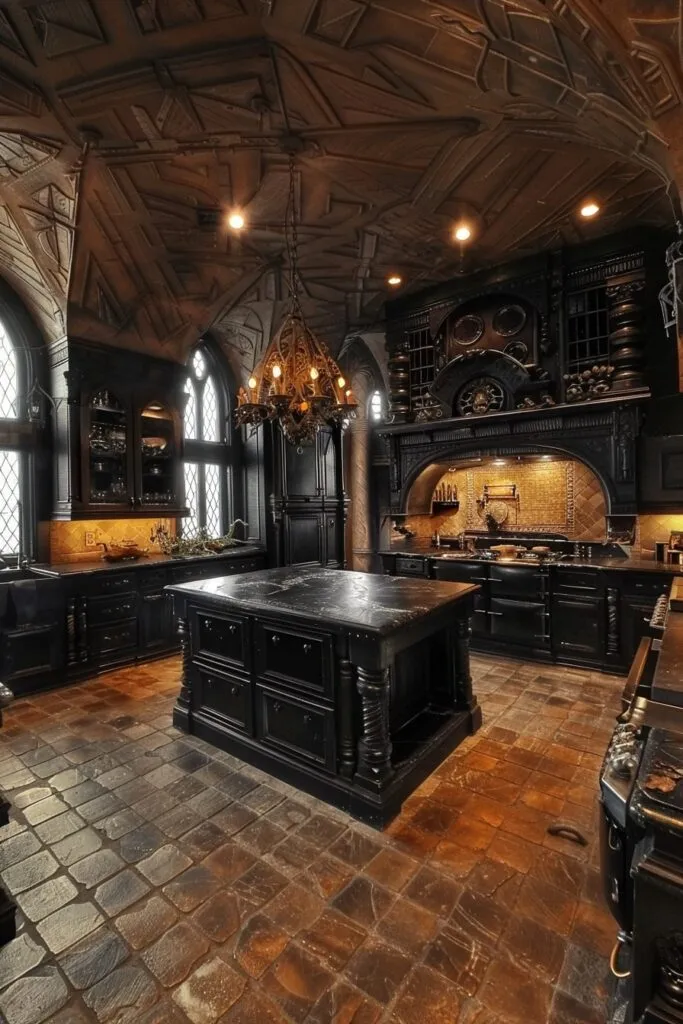
Are you seeking to infuse your living space with an air of mystery, drama, and historical elegance? Gothic kitchen decor offers a distinctive approach to kitchen design, moving away from the ordinary and embracing a style characterized by its rich history, ornate details, and atmospheric ambiance. It is a style that transforms the heart of your home into a space that reflects a unique personality and a passion for the extraordinary. This guide will explore the core elements of Gothic kitchen design, giving you the tools and inspiration to transform your kitchen into a captivating and unforgettable space.
What is Gothic Kitchen Decor?
Gothic kitchen decor is an interior design style inspired by the architectural and artistic features of the Gothic period, which flourished in Europe from the mid-12th century to the 16th century. This style is a dramatic departure from the clean lines and minimalism of contemporary design, embracing instead, a celebration of elaborate detail, deep colors, and an atmosphere of romanticism and mystery. It’s about creating a space that feels both opulent and slightly mysterious, drawing on elements like pointed arches, intricate woodwork, and a palette dominated by deep, rich tones.
Key Elements of Gothic Kitchen Design
Gothic kitchen design is defined by several key elements that work in concert to create its distinctive atmosphere. These include a specific color palette, architectural details, hardware, and furniture. Understanding these elements is the first step in bringing the Gothic aesthetic into your kitchen, whether through subtle hints or a complete transformation. By carefully selecting and integrating these components, you can craft a kitchen that is both visually stunning and evocative of the Gothic era.
Dark Colors and Moody Ambiance

The color palette of a Gothic kitchen typically leans towards deep, saturated tones. Think of charcoal grays, deep reds, forest greens, and even blacks. These colors create a sense of drama and mystery, setting the stage for the other elements of the design. While these darker shades form the foundation, metallic accents like antique gold, silver, or bronze can be introduced to add a touch of luxury and brightness, preventing the space from feeling overly heavy. Remember that lighting is important to balance the darkness, with carefully chosen fixtures to highlight the unique characteristics of the kitchen.
Elaborate Architectural Details
Gothic architecture is renowned for its intricate details. In a Gothic kitchen, these can be incorporated through elements like pointed arches, which can be used for doorways, windows, or even decorative features on cabinetry. Consider incorporating detailed molding and trim work, such as carved panels and decorative corbels. A coffered ceiling or exposed wooden beams can further enhance the Gothic feel, adding visual interest and a sense of history. The goal is to include architectural elements that are both visually engaging and reminiscent of the Gothic era.
Ornate Hardware and Fixtures
Hardware and fixtures are essential to any Gothic kitchen. Look for cabinet knobs and pulls with elaborate designs, such as fleur-de-lis, gothic arches, or other historical motifs. The finish should complement the color scheme; antique brass, wrought iron, and oil-rubbed bronze are excellent choices. Lighting fixtures are also important. Chandeliers with wrought iron detailing, pendant lights with a gothic flair, or sconces with intricate designs can all enhance the dramatic effect. When selecting these items, ensure they align with the color scheme and general mood of the kitchen.
Unique Furniture Pieces

Furniture choices in a Gothic kitchen should reflect the style’s historical inspiration. Consider a large, imposing dining table made of dark wood, with ornate carvings or a sturdy, rustic design. High-backed chairs, possibly with velvet or leather upholstery, can add to the ambiance. A kitchen island, if space allows, could feature a dark wood finish and Gothic-inspired detailing. Avoid contemporary, minimalist furniture in favor of pieces that evoke a sense of history and grandeur. The aim is to choose furniture that reinforces the room’s overall aesthetic.
Incorporating Gothic Elements into Your Kitchen
Integrating Gothic elements into your kitchen doesn’t require a complete remodel; even small adjustments can make a significant difference. You can start by introducing a few key pieces or focusing on specific areas, like hardware or lighting. Begin by evaluating your current kitchen and identifying areas where you can add gothic flair. This could involve replacing cabinet hardware, repainting walls, or incorporating Gothic-inspired decorative items. The key is to start small and gradually build up the desired effect.
Choosing the Right Color Palette
When selecting your color palette, consider the overall mood you want to create. Start with a base color, such as a deep gray, charcoal, or even a dark, muted green. Then, introduce accent colors through your furniture, accessories, and textiles. Deep reds, purples, or even a touch of gold can be used to add visual interest. The color scheme you choose should be cohesive and reflect the gothic aesthetic. Using paint samples and testing colors in different lighting conditions is essential for ensuring the final look meets your vision.
Selecting Gothic-Inspired Furniture

Carefully select your furniture to match the gothic theme. Look for pieces with dark wood finishes, intricate carvings, and traditional designs. A large dining table with high-backed chairs, or a rustic kitchen island with a dark stain can serve as focal points. Consider the materials; velvet, leather, and heavy fabrics can add texture and depth. When choosing furniture, think about how it contributes to the kitchen’s overall atmosphere. Aim for a balance of elegance and functionality.
Adding Decorative Accents
Decorative accents are essential for adding personality to your Gothic kitchen. Consider adding wrought iron candle holders, antique mirrors in ornate frames, and gothic-style artwork. You can also include decorative items like candelabras, vintage bottles, or even a coat of arms. Textiles such as heavy curtains with dark patterns, or decorative cushions with gothic motifs, can also enhance the theme. The key is to choose items that resonate with the gothic aesthetic and help create an environment that is both captivating and unique.
Gothic Kitchen Decor vs Traditional Kitchen Decor
While both Gothic and traditional kitchen designs focus on historical aesthetics, they diverge significantly in their approach. Traditional kitchens typically emphasize classic design elements, neutral colors, and a sense of timeless elegance. Gothic kitchens, on the other hand, embrace drama, bold colors, and historical details drawn from the Gothic period. Understanding these differences will assist you in deciding which style aligns best with your aesthetic preferences and lifestyle. It’s about evaluating what you want to create and selecting the design that most fully captures your vision.
Comparing Styles and Aesthetics

Traditional kitchens often feature light, neutral color schemes, such as whites, creams, and soft pastels. They typically have clean lines, simple cabinetry, and understated hardware. Gothic kitchens, in contrast, utilize deep, rich colors like blacks, deep reds, and dark greens. The aesthetics include elaborate architectural details, ornate hardware, and furniture. The overall feeling is dramatic and mysterious, compared to the calmer and more predictable traditional kitchen. The difference lies in the emphasis on detail, color, and the creation of an atmosphere.
Functionality and Practicality
Both Gothic and traditional kitchens can be highly functional, but the implementation of functionality differs. Traditional kitchens often prioritize ease of use with layouts designed for efficiency and practicality. Gothic kitchens can also be functional, but sometimes require careful planning to ensure practicality. This may involve strategic placement of lighting, and the selection of appliances and materials that are both stylish and durable. It is necessary to assess your personal needs to see which design accommodates your habits and preferences.
Cost Considerations
The cost of a kitchen remodel varies widely based on design choices and materials. Traditional kitchens can be more affordable, especially if you maintain the existing layout and opt for standard materials. Gothic kitchens, with their emphasis on intricate details, custom cabinetry, and unique finishes, may be more expensive. However, costs can be managed by incorporating gothic elements selectively, through DIY projects, and by making informed choices regarding materials and features. The budget should align with both your aesthetic goals and financial resources.
Making Your Decision

Choosing between Gothic and traditional kitchen decor is a personal decision that depends on your aesthetic preferences, lifestyle, and budget. Consider your daily habits, your favorite design aesthetics, and the overall atmosphere you want to create. Browse through design magazines, online platforms, and visit showrooms to gather inspiration. Once you have a clear vision, you can begin to create a kitchen that perfectly suits your taste and needs. The most important factor is to select a style that makes you happy and that you will enjoy every day.
Tips for a Successful Gothic Kitchen Transformation
Successfully transforming your kitchen into a Gothic haven requires thoughtful planning, attention to detail, and a willingness to experiment. Start by creating a detailed plan, set a budget, and gather inspiration. The key is to balance your vision with practical considerations. With careful planning, you can ensure a result that is both aesthetically pleasing and functional. The tips below can guide you to a great kitchen.
Planning and Preparation
Before starting any remodeling project, careful planning is essential. Sketch out your design ideas, create a detailed budget, and research the cost of materials and labor. Consider the kitchen’s layout, the placement of appliances, and the flow of movement within the space. If you plan to undertake any DIY projects, ensure that you have the necessary skills and tools, or be prepared to learn as you go. Proper planning prevents costly mistakes and keeps the project on track.
DIY Projects and Budget-Friendly Ideas

DIY projects are a fantastic way to personalize your Gothic kitchen while also saving money. Repainting cabinets, replacing hardware, or building decorative shelves are all achievable DIY projects. Look for budget-friendly materials, such as reclaimed wood for shelving, or use stencils to create decorative patterns on walls. Consider adding gothic-inspired accents like wrought iron candle holders, antique mirrors, and vintage accessories that can be found at flea markets or thrift stores. DIY projects let you express your creativity while keeping costs down.
Maintenance and Upkeep
Maintaining a Gothic kitchen requires some special considerations. Dark colors can show dust and fingerprints more readily, so regular cleaning is important. Consider using durable, easy-to-clean materials for countertops and flooring. Ensure that hardware and fixtures are securely installed and maintained. With the proper care, your Gothic kitchen will remain a beautiful and functional space for years to come. Regularly cleaning and inspecting the elements of the kitchen guarantees that it remains visually appealing and in good condition.
In conclusion, Gothic kitchen decor offers a distinctive and captivating way to transform your kitchen into a space of drama, mystery, and historical elegance. By embracing the key elements of Gothic design, from dark colors and elaborate architectural details to ornate hardware and unique furniture, you can create a kitchen that reflects your unique personality and love for the extraordinary. Whether you choose to undertake a full remodel or incorporate Gothic elements incrementally, the result will be a kitchen that is both beautiful and unforgettable. Embrace the Gothic spirit and make your kitchen a testament to your individual style.