Understanding Kitchen Decor and Wall Art
Kitchen decor and wall art play a crucial role in shaping the ambiance and functionality of your cooking space. Beyond mere aesthetics, the right choices can transform a utilitarian area into a welcoming heart of the home. The integration of wall art not only adds visual interest but also reflects personal style and sets the tone for the entire kitchen. From vibrant paintings to minimalist prints, the options are vast, providing opportunities to express creativity and enhance the overall experience of the space. The strategic use of wall art can also influence the perceived size of the kitchen, making it feel more spacious or cozy depending on the selections made.
Factors to Consider Before Buying Wall Art
Before you begin browsing for kitchen wall art, it’s essential to consider several key factors to ensure your selections complement the existing decor and meet your needs. First, assess the overall style of your kitchen, whether it’s modern, farmhouse, or traditional. This will guide your choices towards artwork that aligns with the aesthetic. Next, evaluate the available wall space and consider the proportions of the art relative to the area. The size of the art should be in proportion to the wall, avoiding pieces that are either too small and get lost or too large and overwhelm the space. Finally, consider the functionality of the art in terms of its ability to withstand the kitchen environment.
Size and Scale Considerations

The size and scale of your wall art are paramount in creating a balanced and visually appealing kitchen. Measure the available wall space where you intend to hang the art. A large, empty wall can handle a substantial piece or a gallery wall arrangement, while smaller spaces might benefit from a single, smaller artwork or a collection of coordinated prints. When selecting art, ensure that its proportions are in harmony with the surrounding elements. For example, if placing art above a dining table, the width of the art should generally align with the width of the table to create visual cohesion. Incorrect sizing can make the kitchen feel unbalanced, so careful consideration of these factors is essential.
Consider the scale of the art in relation to other elements like cabinets, appliances, and windows. The aim is to achieve a balanced look, where the art complements, rather than competes with, the other features of the kitchen. Avoid artwork that is too small for a large wall, as it can appear insignificant and diminish the impact of your decorating efforts. Similarly, overly large pieces in small kitchens can make the space feel cramped. The goal is to make the space feel open, airy and comfortable. Ensure the scale feels right by visualizing the artwork in place or using masking tape to outline the piece on the wall before purchasing.
How to Measure Your Kitchen Space
Accurate measurements are critical when selecting wall art for your kitchen. Begin by measuring the wall space where you plan to hang the art. Use a measuring tape to determine the width and height of the wall, accounting for any obstacles like windows, doors, or cabinets. Consider the placement of the art relative to other elements in the kitchen, such as the backsplash or countertops. Measuring the distance from these elements to the intended artwork placement will help determine the appropriate size and scale of the piece. It is essential to measure the space above the furniture, such as tables or shelves, to ensure the art has a comfortable visual space around it.
Matching Style and Theme
The style and theme of your kitchen should guide your choices in wall art. If your kitchen has a modern aesthetic, consider abstract paintings, minimalist prints, or geometric designs. For a farmhouse-style kitchen, rustic artwork like vintage signs, botanical prints, or landscapes can complement the decor. A traditional kitchen may benefit from classic still-life paintings or elegant framed prints. When choosing art, ensure that it harmonizes with existing elements such as cabinet colors, countertops, and appliances. Sticking to a cohesive theme creates a visually appealing and unified space. Consistency in the theme makes the space feel intentional and well-designed.
Choosing the Right Color Palette

Color plays a significant role in setting the mood and enhancing the overall design of your kitchen. When selecting wall art, consider your kitchen’s existing color scheme. If your kitchen is dominated by neutral colors, you might choose art with bold, vibrant colors to add a pop of excitement. For kitchens with already strong colors, select art that complements the existing tones, avoiding pieces that clash or overwhelm the space. The color palette you choose can influence the feel of your kitchen. Warm colors like reds and oranges can create a cozy atmosphere, while cool colors like blues and greens can evoke a sense of calm and serenity. It’s essential to create balance and harmony through the strategic use of color.
Selecting Wall Art Materials
The material of your wall art is crucial in terms of aesthetics and durability, especially in a kitchen environment, which is prone to moisture, grease, and varying temperatures. Consider materials that are easy to clean and can withstand kitchen conditions. Canvas prints and framed art with protective glass or acrylic are excellent options, as they can be wiped clean and resist damage from spills or splatters. Metal art and wood art can also be used but must be sealed to protect against moisture and potential damage. Always check the materials to ensure they suit the conditions of your cooking space, and remember that materials contribute significantly to the overall aesthetic of your space.
Types of Wall Art for Kitchens
Paintings for Kitchens

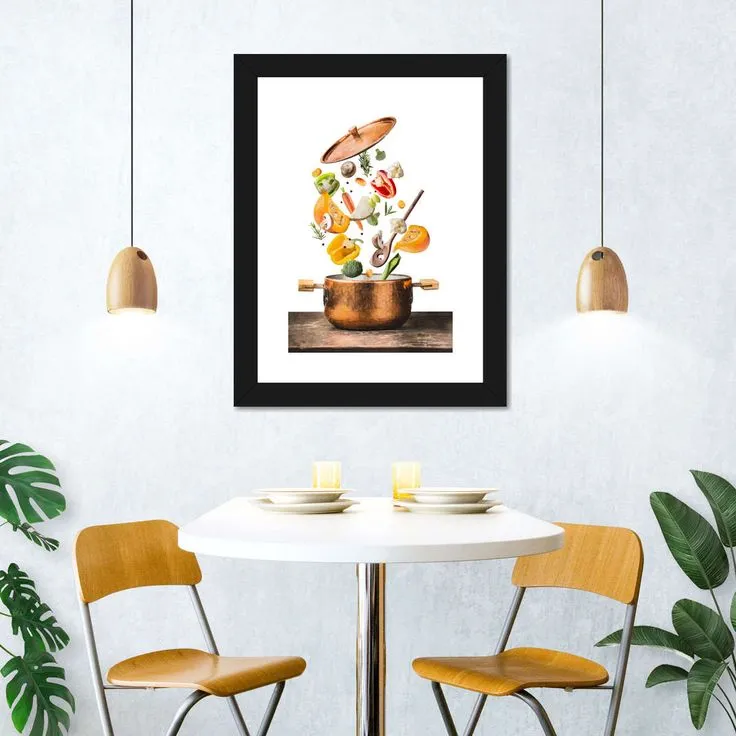
Paintings offer a versatile way to add personality and visual interest to your kitchen. Consider themes that complement the space, such as food-related imagery, still lifes, or abstract designs that incorporate the kitchen’s color scheme. Ensure that the painting is framed properly and protected by glass or acrylic to shield it from moisture and spills. The style of the painting should complement your kitchen’s overall decor; for example, a modern kitchen might suit an abstract piece, whereas a farmhouse kitchen may benefit from a landscape or botanical painting. Paintings are often the centerpiece of a room and can be the best choice for a visual statement.
Photography in Kitchens
Photography provides another way to infuse personality into your kitchen decor. Choose high-quality prints of food, landscapes, or abstract images. Black and white photography can offer a classic and elegant look, while color photography can add vibrancy and energy. Ensure that photographs are printed on archival paper and protected by a frame with glass or acrylic. Consider themed photography, such as a series of images of coffee beans or fresh produce, to tie into the kitchen theme. Photographs also allow you to add personal touches, like vacation photos of meals enjoyed with friends and family. The selection of photos can bring back fond memories and can serve as a great conversation starter.
Choosing Kitchen-Specific Wall Art
Consider art that specifically relates to the kitchen environment to create a cohesive and thematic space. Examples include prints of culinary tools, vintage cookbooks, or food-related illustrations. Other options include typography prints featuring inspirational quotes about cooking or family. For a touch of whimsy, incorporate art that features funny sayings or unique designs. These options can add character and charm. Choosing kitchen-specific art helps reinforce the room’s function, and it can also serve as a point of inspiration for those using the space. It adds a layer of thematic consistency that enhances the overall aesthetic of your kitchen.
Practical Considerations

Lighting and Placement Tips
Proper lighting and placement are key to showcasing your wall art effectively. Ensure that your artwork is well-lit, using natural or artificial light to highlight its details and colors. Avoid direct sunlight, which can cause fading over time. Consider placing the art in areas where it can be easily seen, such as above the dining table, the sink, or a countertop. Use the rule of thumb of hanging art at eye level, typically 57 to 60 inches from the floor, depending on the average height of the people using your kitchen. Consider the sightlines of your kitchen when deciding the best placement of art.
How to Hang Wall Art Securely
Securely hanging your wall art is crucial to prevent accidents and ensure that your artwork remains in place. Use appropriate hanging hardware, such as picture hooks, nails, or heavy-duty anchors, depending on the weight and type of the artwork and the wall material. Ensure that the hooks are rated for the weight of the art, and consider using multiple hooks for larger pieces. Always use a level to ensure that the art hangs straight, avoiding the need for re-hanging. Test the stability of the art by gently pulling it down after installation. Properly installed art ensures your space is safe and looks its best.
Maintaining and Cleaning Your Wall Art

Regular maintenance and cleaning will extend the life of your wall art and keep it looking its best. Dust your art regularly with a soft cloth or a feather duster to prevent the buildup of dust and debris. For framed art with glass or acrylic, clean it using a glass cleaner and a soft cloth, taking care not to spray cleaner directly onto the artwork. When cleaning unframed art, be gentle and avoid using harsh chemicals or excessive moisture, which can damage the artwork. Following these cleaning tips will help to preserve your kitchen wall art.
Budgeting for Kitchen Wall Art
Setting a budget before you start shopping will help you make informed decisions and avoid overspending. Prices for kitchen wall art vary widely depending on the type of art, the materials, and the size of the piece. Determine how much you’re willing to spend, and then explore options within that range. Consider the cost of framing, matting, and any additional accessories. Keep an eye out for sales, discounts, and promotions from art suppliers. Explore DIY options, such as creating your own art, which can be a cost-effective way to personalize your kitchen space. Creating a budget helps you stay on track and allows you to shop with confidence.